
DIY Roof Replacement: Is Doing It Yourself the Right Choice for Your Home?
We live in a world where you can learn almost anything from a 10-minute video. From fixing a sink to tiling a floor, the "do-it-yourself" spirit is part of what makes owning a home rewarding. Naturally, when a roof starts to show its age, many homeowners ask: "Can I just do this myself and save a few thousand dollars?"
It’s a fair question. But a roof is unique. Unlike a kitchen backsplash, if a roof fails, it doesn't just look bad—it can compromise the entire structural integrity of your home.
In this guide, we’re going to step away from the sales pitch and look at the actual science and math of roofing. Our goal is to help you understand the technical "why" behind professional standards so you can make the most informed decision for your home’s future.
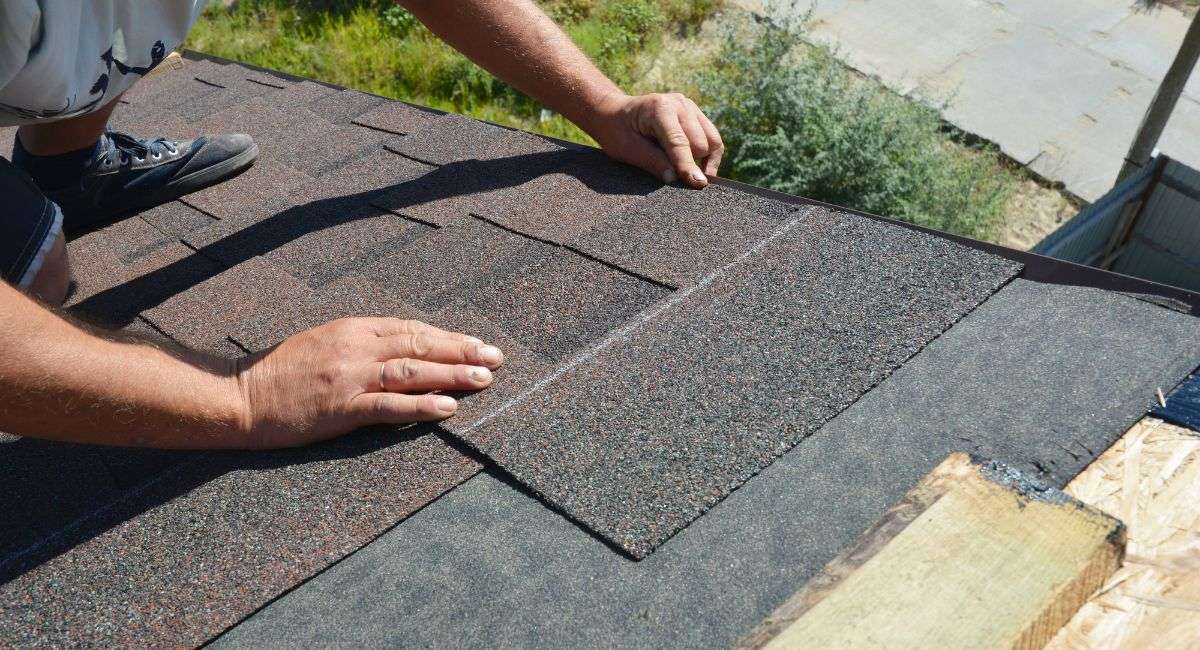
The "Waterproofing Sandwich": Understanding Your Roof’s Layers
When you look at a roof from the street, you see shingles. When we look at a roof, we see a complex waterproofing engine. For a
The Decking (Your Roof’s Foundation)
Everything starts with the wood. If your home has old "plank" decking or rotted plywood "soft spots," the nails won't have enough "pull-out resistance." If the foundation isn't solid, your new roof is essentially just sitting on the house, waiting for a high-wind day to lift off.
The Drip Edge (The "Rain Coat" for Your Boards)
This is where 90% of DIY errors occur.
Water has a property called "capillary action"—it likes to stick to surfaces and crawl into gaps. The metal drip edge is engineered to break that surface tension and force water into your
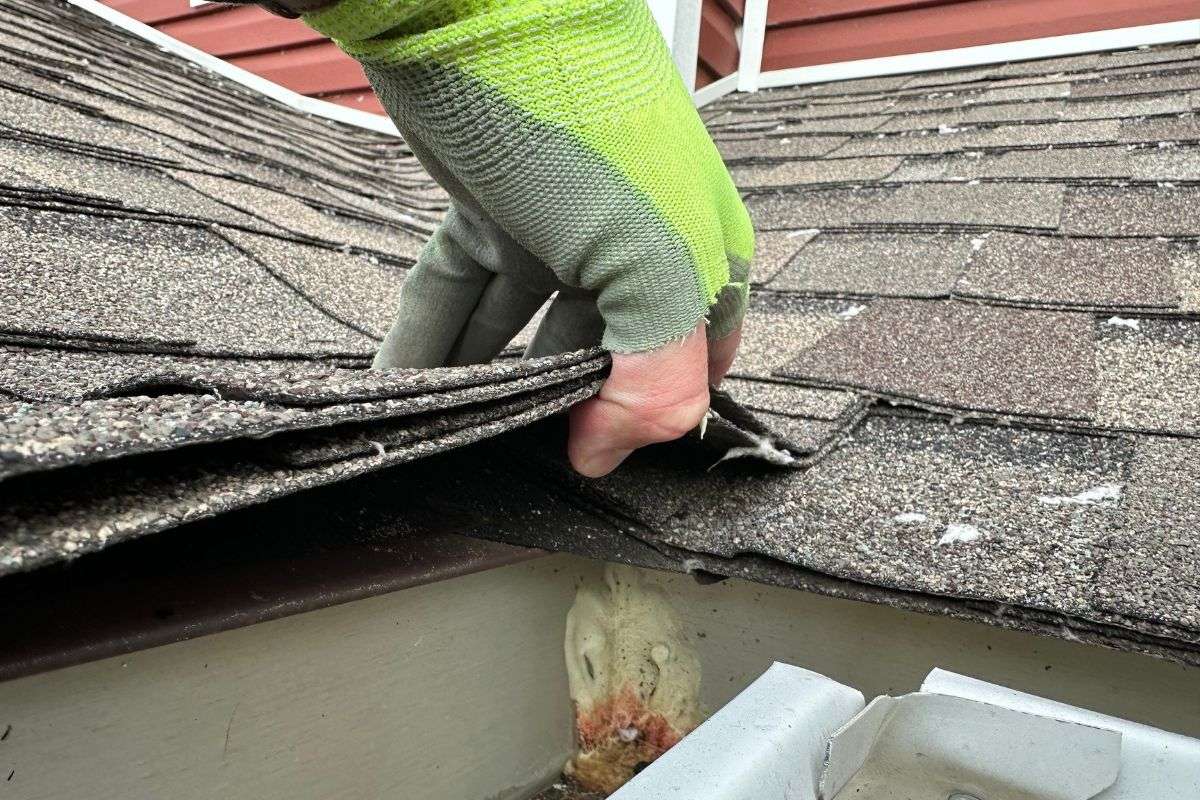
Starter Shingles (The Wind-Guard)
This is the "secret sauce" of a professional roof. Many DIYers just flip a regular shingle upside down for the first row. But real starter shingles have a specialized adhesive bead at the very bottom edge. This "locks" the first row of shingles down so the wind can't get a thumb under the edge and peel the roof back like a banana.
Attic Ventilation (The Engine)
Your roof needs to "breathe." If it doesn't, heat builds up in the summer and "cooks" the shingles from underneath, making them brittle. In the winter, trapped moisture can cause mold. We calculate the Net Free Venting Area to make sure air flows perfectly from your
DIY vs. Professional: A Financial Perspective
When you see a quote for a roof, it’s easy to think about the savings of doing the labor yourself. But we encourage you to look at the Life Cycle Cost of the roof.
| The Factor | The DIY Approach | The Roof MD Standard |
| Tool Cost | $1,500+ for ladders, nailers, and safety gear | Included |
| Completion Time | 4–7 days (weather permitting) | Usually 1 day |
| Material Quality | Retail-grade (what's on the shelf) | Platinum-grade (contractor exclusive) |
| Warranty Status | Materials only; labor is on you | 50-Year Non-Prorated Protection |
| Home Resale | May be flagged by home inspectors | Adds documented appraised value |
The Safety Factor: Beyond the Ladder
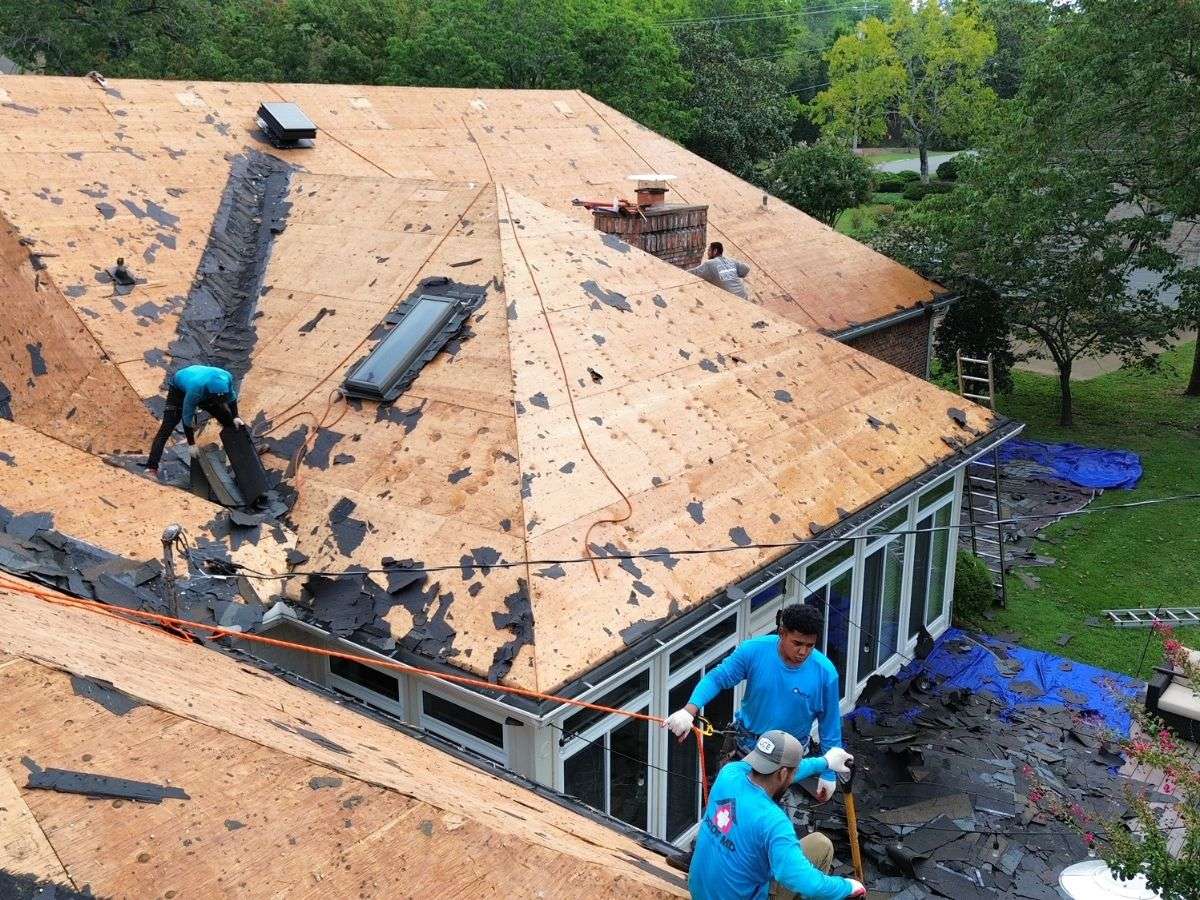
Roofing is consistently ranked as one of the most dangerous jobs in the country. It’s not just about the height; it’s about the "roof legs" and safety systems.
- Fall Protection: Professional crews use OSHA-approved harnesses and roof anchors. Most homeowners don't have the equipment needed to work safely on steep pitches.
- Debris & Nails: A standard roof tear-off creates about 2 tons of debris. Managing that without a Catch-All system usually means flat tires and nails in your flower beds for months to come.
Why Your Location Matters
Climate changes the way we build. A roof in Texas needs different attention than a roof in North Carolina:
- The Heat Scuff: In Georgia and Alabama, the afternoon sun makes shingles very soft. Walking on them without specialized boots can scuff the protective granules off, ending the roof's life before it even starts.
- The 6-Nail Rule: In high-wind areas like Kansas and Missouri, we use 6 nails per shingle. A DIYer following the standard 4-nail "retail" instructions might find their shingles in the neighbor's yard after a storm.
The FAQ: Questions We Get Every Day
Q: Will insurance cover me if I do my own roof? A: It's risky. If a leak occurs later, insurance adjusters often look for "improper installation" to deny interior damage claims. Having a licensed
Q: Can I just put new shingles over my old ones? A: We really don't recommend it. It's called a "layover," and while it's cheaper, it traps heat and hides rotted wood. Most modern warranties are voided if you install over an old layer.
Get a Professional Second Opinion
We respect the DIY spirit, but your roof is too important to be a "learning project." Why not let the experts at Roof MD give you a Free Inspection and Estimate first? We'll show you exactly what your home needs, explain the science behind it, and show you how a professional installation pays for itself in the long run.